> For the complete documentation index, see [llms.txt](https://clients.medianova.com/llms.txt). Markdown versions of documentation pages are available by appending `.md` to page URLs; this page is available as [Markdown](https://clients.medianova.com/products/object-storage-stook/getting-started-with-stook.md).
# Getting Started with Stook
Create and manage Stook Object Storage buckets, credentials, and FTP accounts to securely store and transfer your data.
Create a Stook Bucket and configure the credentials or FTP accounts required to access and manage your stored data.
{% hint style="info" %}
This page covers the initial Stook Object Storage setup. For access, traffic, capacity, and data protection controls applied to an individual bucket, see [Bucket Configuration](/products/object-storage-stook/bucket-configuration.md).
{% endhint %}
## Manage Stook Buckets
## Create a Stook Bucket
{% stepper %}
{% step %}
### **Open Stook Buckets**
In the [Medianova Control Panel](https://cloud.medianova.com), select **Stook Object Storage → Buckets**.
{% endstep %}
{% step %}
### **Create a Stook Bucket**
Create a Stook Bucket
Select **Create Bucket**.
{% endstep %}
{% step %}
### **Configure the Stook Bucket**
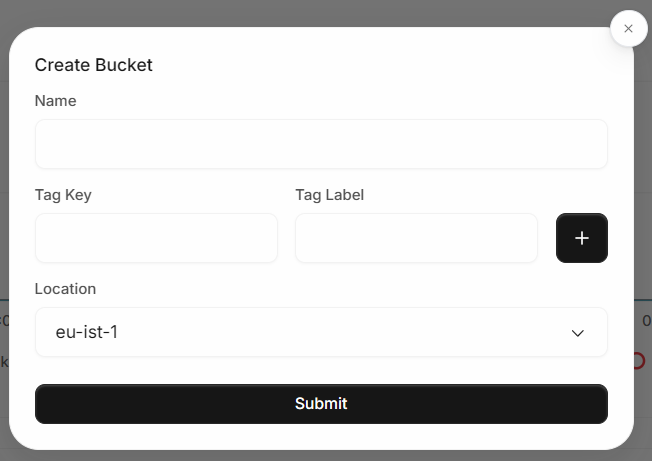
In the **Create Bucket** window:
* Enter a descriptive **Name** for the Stook Bucket.
* Optionally, add a **Tag Key** and **Tag Label** for organization.
* Select the required **Location**.
{% endstep %}
{% step %}
### **Create the Stook Bucket**
Select **Submit**.
The new Stook Bucket appears in the bucket list.
{% endstep %}
{% endstepper %}
## Configure a Stook Bucket
After creating a Stook Bucket, use **Bucket configuration** to manage bucket-level settings, including:
* Public Access Block
* CORS Headers
* Rate Limit
* Quota
* Server-Side Encryption
* Versioning
* MFA Delete
* Object Lock
* Event Notifications
See Bucket Configuration for configuration details and feature dependencies.
## Delete a Stook Bucket
{% stepper %}
{% step %}
### **Select the Stook Bucket**
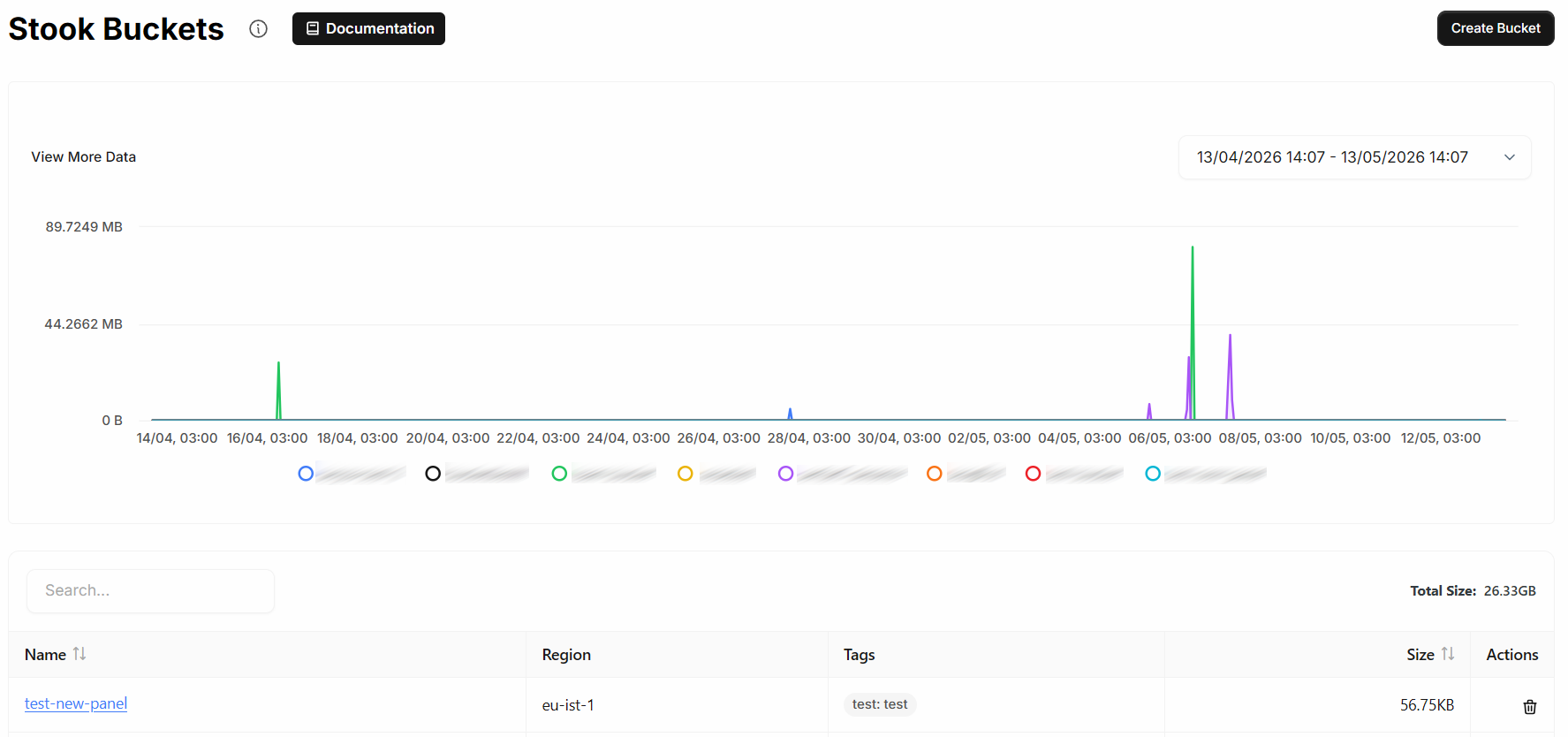
Stook Bucket list
On the **Stook Buckets** page, select the **Actions** icon next to the Stook Bucket, then select **Delete**.
{% endstep %}
{% step %}
### **Confirm the deletion**
Select **Yes** in the confirmation dialog.
{% endstep %}
{% endstepper %}
{% hint style="info" %}
A Stook Bucket connected to a CDN Resource cannot be deleted. Remove the bucket from the CDN Resource before deleting it.
{% endhint %}
## Manage Stook Credentials
Credentials provide the access key and secret key required by S3-compatible clients and applications. Permissions can be scoped to a Stook Bucket, path, and specific S3 actions.
{% hint style="info" %}
For detailed access key management and authenticator configuration, see [Manage Access Keys](/products/object-storage-stook/manage-access-keys.md).
{% endhint %}
## Create Stook Credentials
{% stepper %}
{% step %}
### **Open Stook Credentials**
Select **Stook Object Storage → Credentials**.
{% endstep %}
{% step %}
### **Create credentials**
On the **Stook Credentials** page, select **Create Credential**.
{% endstep %}
{% step %}
### **Configure credential scope**
Enter a **Credential Name**, select the target Stook Bucket, and optionally configure a **Path** scope.
{% endstep %}
{% step %}
### **Configure permissions**
Use **Filter Actions** to search for actions or **Expand All** and **Collapse All** to browse permission groups.
Select **All S3 Actions** or select the required actions from the available permission categories.
{% endstep %}
{% step %}
### **Create the credentials**
Select **Submit**.
The new credentials appear in the credential list.
{% endstep %}
{% endstepper %}
## View Stook Credentials
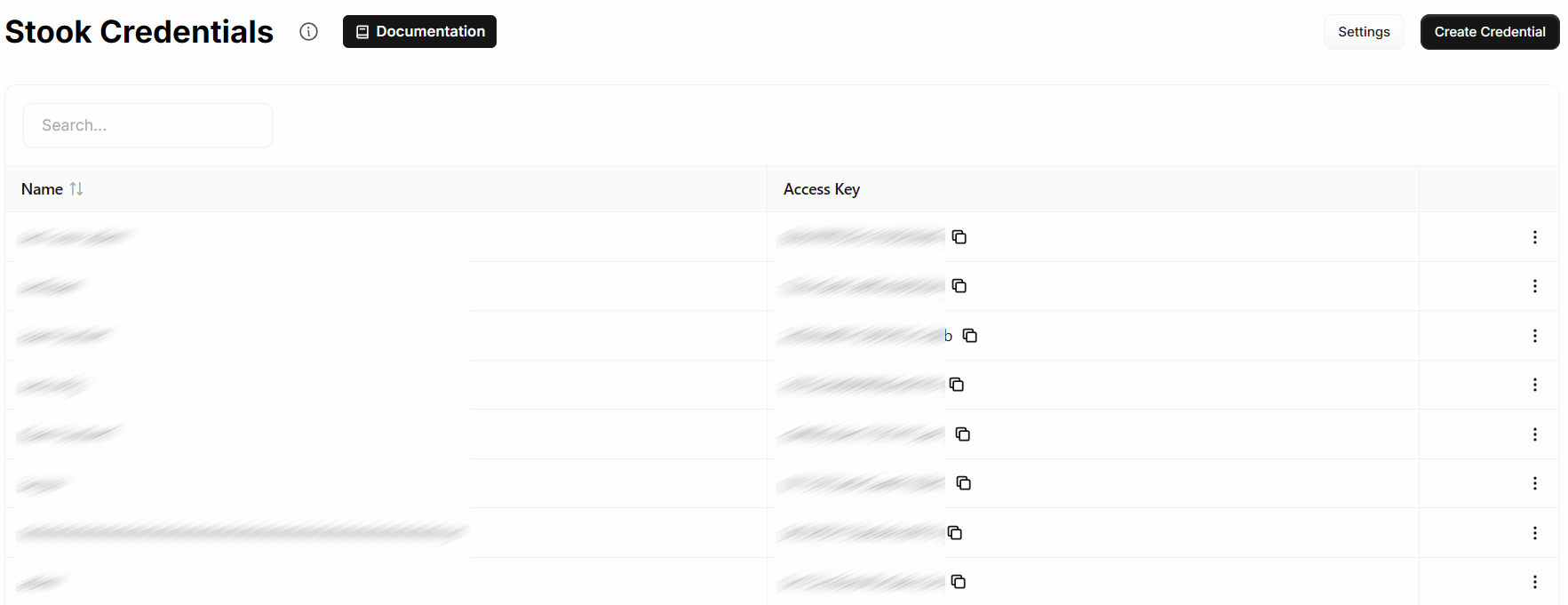
The credential details include:
* **Access Key**
* **Secret Key**
* **Endpoint**
To view the **Secret Key**, re-enter your Medianova Control Panel password.
Stook credential details
## Delete Stook Credentials
{% stepper %}
{% step %}
**Select the credentials**
On the **Stook Credentials** page, select the **Actions** icon for the credentials, then select **Delete**.
{% endstep %}
{% step %}
**Confirm the deletion**
Select **Yes**.
{% endstep %}
{% endstepper %}
## Manage FTP Accounts
FTP accounts provide file transfer access to Stook Object Storage.
## Create an FTP Account
{% stepper %}
{% step %}
**Open FTP Accounts**
Select **Stook Object Storage → FTP Accounts**.
{% endstep %}
{% step %}
### **Create an FTP account**
On the **FTP Accounts** page, select **Create FTP Account**.
{% endstep %}
{% step %}
### **Configure the FTP account**
Enter the required account settings, then select **Submit**.
{% endstep %}
{% step %}
### **Verify the FTP account**
The new FTP account appears in the account list.
{% endstep %}
{% endstepper %}
## Edit an FTP Account
{% stepper %}
{% step %}
### **Open the FTP account**
Select the **Actions** icon next to the FTP account, then select **Edit**.
{% endstep %}
{% step %}
### **Update the FTP account**
Modify the required fields and save the changes.
{% endstep %}
{% endstepper %}
## Delete an FTP Account
{% stepper %}
{% step %}
### **Select the FTP account**
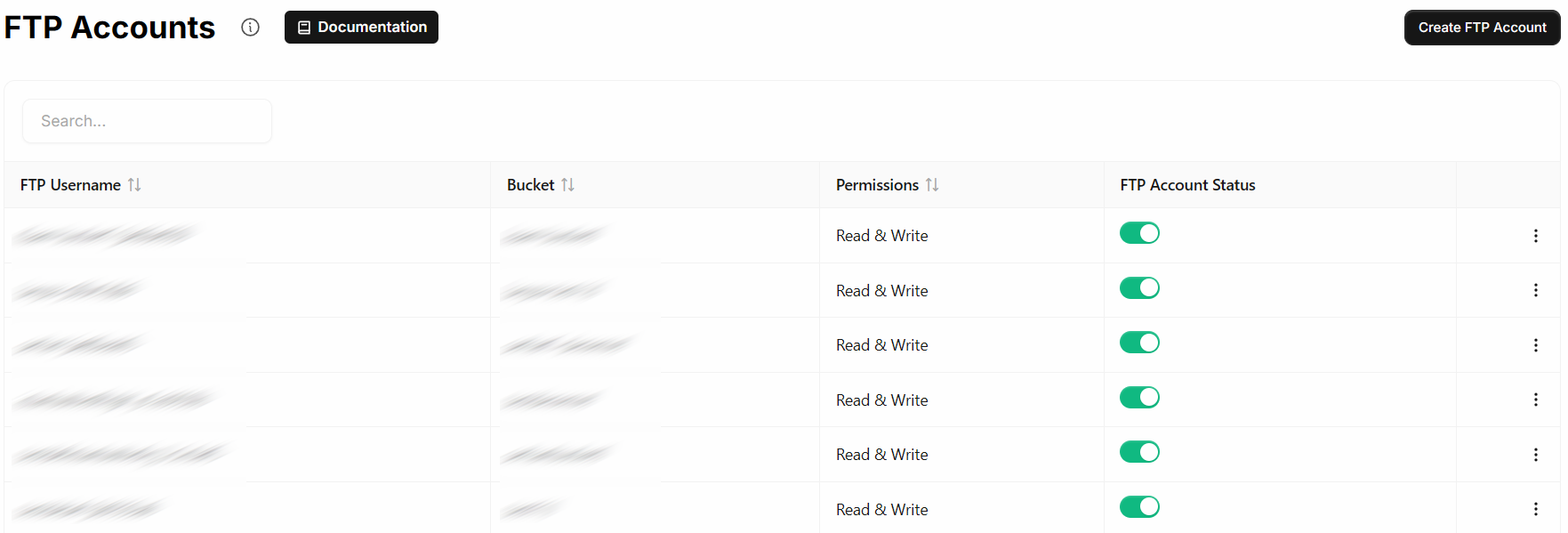
Stook FTP account list
Select the **Actions** icon next to the FTP account, then select **Delete**.
{% endstep %}
{% step %}
### **Confirm the deletion**
Select **Yes**.
{% endstep %}
{% endstepper %}
## Next Steps
After completing the initial Stook setup:
* Configure access, traffic, capacity, and data protection settings under [Bucket Configuration](/products/object-storage-stook/bucket-configuration.md).
* Configure credentials and authenticators under [Manage Access Keys](/products/object-storage-stook/manage-access-keys.md).
* Connect a public [Stook Bucket to a CDN Resource](/products/object-storage-stook/connect-stook-bucket-to-cdn.md) when objects need to be delivered through Medianova CDN.
* Use the [Integration & Usage Guides](/products/object-storage-stook/integration-and-usage-guides.md) to connect supported S3-compatible tools and SDKs.
---
# Agent Instructions
This documentation is published with GitBook. GitBook is the documentation platform designed so that both humans and AI agents can read, navigate, and reason over technical content effectively. Learn more at gitbook.com.
## Querying This Documentation
If you need additional information that is not directly available in this page, you can query the documentation by asking a question.
Perform an HTTP GET request on the following URL with the `ask` and `goal` query parameters:
```
GET https://clients.medianova.com/products/object-storage-stook/getting-started-with-stook.md?ask=&goal=
```
`ask` is the immediate question: it should be specific, self-contained, and written in natural language.
`goal` is what the user is ultimately trying to achieve, the reason they need the answer. Sharing it helps GitBook give you a better, more relevant answer. A goal is most helpful when it describes the outcome the user wants rather than restating the question. For example, with `ask=how do I create an API token`, a goal like `automate deployments from our CI pipeline` lets GitBook tailor the answer to that use case.
The response will contain a direct answer to the question and relevant excerpts and sources from the documentation.
Use this mechanism when the answer is not explicitly present in the current page, you need clarification or additional context, or you want to retrieve related documentation sections.